


Unglazed
Porcelain Tiles
Discover more 
- Unglazed
Porcelain Tiles - Full Body
- Soluble Salt Nano
Wooden
Strips
Discover more 
- Wooden
Strips - 20X120
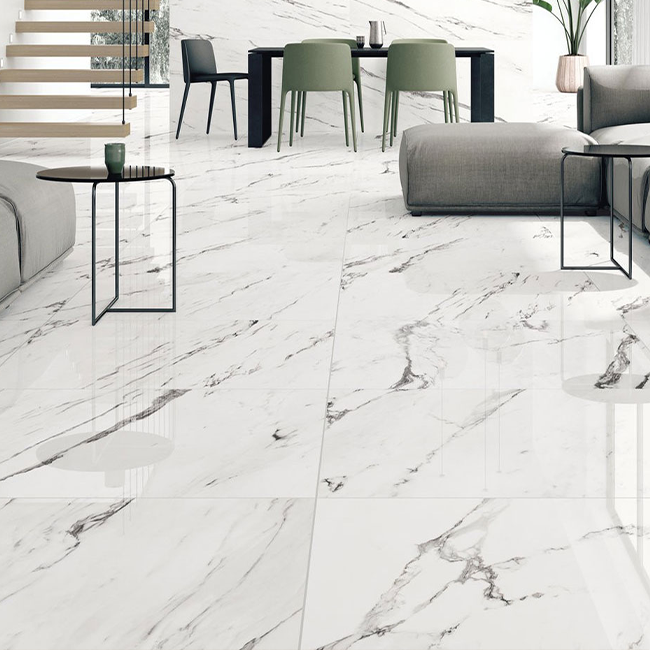
In the dynamic landscape of modern construction materials, vitrified tiles have emerged as the preferred choice for architects, builders, and homeowners seeking the perfect blend of durability, aesthetics, and performance.
As India solidifies its position as the world's second-largest tile producer and exporter, understanding the science, manufacturing excellence, and market dynamics behind vitrified tiles becomes essential for contemporary construction and interior design.
The term "vitrification" derives from the Latin word "vitrum," meaning glass—a fitting description for the transformation that occurs during this sophisticated manufacturing process. Vitrified tiles are created through hydraulic pressing of clay, quartz, feldspar, and silica mixtures, followed by exposure to extremely high temperatures that fundamentally alter the material's molecular structure.
The precision required in this process cannot be overstated. Modern manufacturing facilities employ computer-controlled kilns that maintain exacting thermal parameters throughout the firing cycle, ensuring consistency across production batches—a critical factor for large-scale projects requiring uniform appearance and performance.
The journey from raw earth to polished vitrified tiles encompasses multiple stages, each contributing to the final product's quality.
In homes, these porcelain tiles excel in high-traffic areas like living rooms, kitchens, and hallways where their scratch resistance and ease of maintenance provide long-term value. Residential construction remains the largest end-use sector, contributing about 60% of market demand . The waterproof nature of vitrified tiles makes them ideal for bathrooms and wet areas, eliminating concerns about water damage and mold growth.
Commercial and Industrial SpacesCommercial applications demand even greater performance. Airports, shopping malls, hotels, and office complexes rely on wall tiles and floor tiles to withstand constant foot traffic while maintaining their appearance. Double-charge vitrified tiles, featuring a 3-4mm thick layer of pigmented material, are specifically engineered for heavy-traffic environments, offering exceptional wear resistance.
Outdoor ApplicationsThe frost resistance and UV stability of vitrified tiles make them suitable for exterior applications including patios, walkways, and building facades. Their low water absorption prevents moisture-related damage in freeze-thaw cycles that would destroy lesser materials.
Market Trends: India's Rise as a Global Tiles ExporteThe vitrified tiles industry represents a remarkable growth story, particularly in India, which has transformed from a modest player to a global powerhouse in tile manufacturing and export.
The global vitrified tiles market was valued at $543.43 billion in 2024 and is projected to reach $926.73 billion by 2035, exhibiting a CAGR of 4.97%. This substantial growth reflects increasing global demand for durable, low-maintenance flooring solutions that combine aesthetic appeal with practical performance.
India's ceramic tile industry has experienced phenomenal expansion, with the market expected to reach $10.45 billion in 2025 and grow at a CAGR of 8.67% to reach $15.84 billion by 2030. This growth significantly outpaces global averages, driven by domestic consumption, infrastructure development, and aggressive export strategies.
As a prominent tiles exporter in India, manufacturers benefit from abundant raw materials, competitive labor costs, and proximity to major export markets. India became the world's second-largest tile exporter by 2023, a remarkable achievement considering the country ranked tenth globally in 2013.
As construction practices evolve and consumer preferences shift, vitrified tiles continue adapting to meet emerging demands. Antimicrobial glazes are gaining traction in healthcare facilities. Textured surfaces enhance slip resistance without compromising aesthetics. Ultra-large format tiles minimize grout lines for seamless, monolithic appearances in premium projects.
The convergence of traditional manufacturing excellence with cutting-edge technology positions vitrified tiles as a cornerstone material for 21st-century architecture. From the precision of the vitrification process to the rigor of quality standards, every aspect reflects a commitment to excellence. As porcelain tiles and glazed vitrified tiles from Indian manufacturers reach global markets, they carry with them superior products that enhance our built environment through beauty and lasting performance.
© Exclusive Tiles. All Rights Reserved. 